LogSense + n8n
Automated downtime replies backed by Apache log analysis and a lightweight monitoring workflow.
Project summary
- Scope of work: PHP log analyzer, n8n workflow, AI-assisted reply drafting
- Industry / use case: Monitoring / web operations
- Type: Case study
Turning downtime emails into structured operational replies
This case study explains how I use LogSense, a PHP Apache log analyzer, and an n8n workflow to automatically reply to standardized downtime emails.
The idea is simple: extract the time window from the email, pull the relevant log metrics, and generate a clear data-backed response.
Context and problem
Monitoring teams regularly send messages asking whether there was an incident or planned activity inside a given date range. Manually digging through access and error logs is slow, especially when older months are archived and a fast response is expected.
The goal was to automate four steps reliably: detect downtime requests, extract the date range, pull log metrics through an API, and generate a consistent reply draft.
LogSense and workflow design
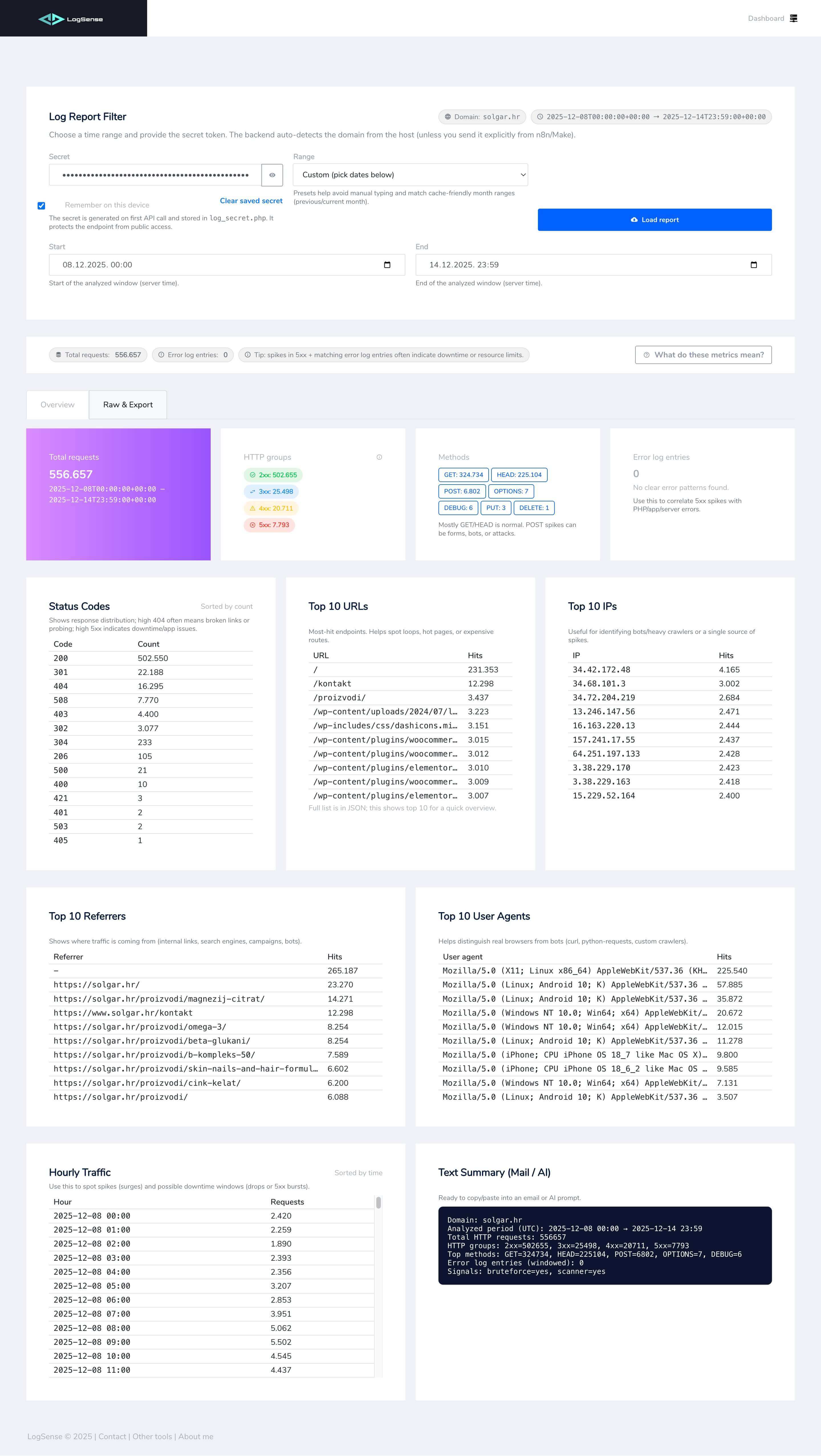
LogSense acts as a lightweight PHP log analyzer that can run in shared-hosting environments. It reads Apache logs, finds the relevant interval, and returns structured JSON with the metrics needed for a useful reply.
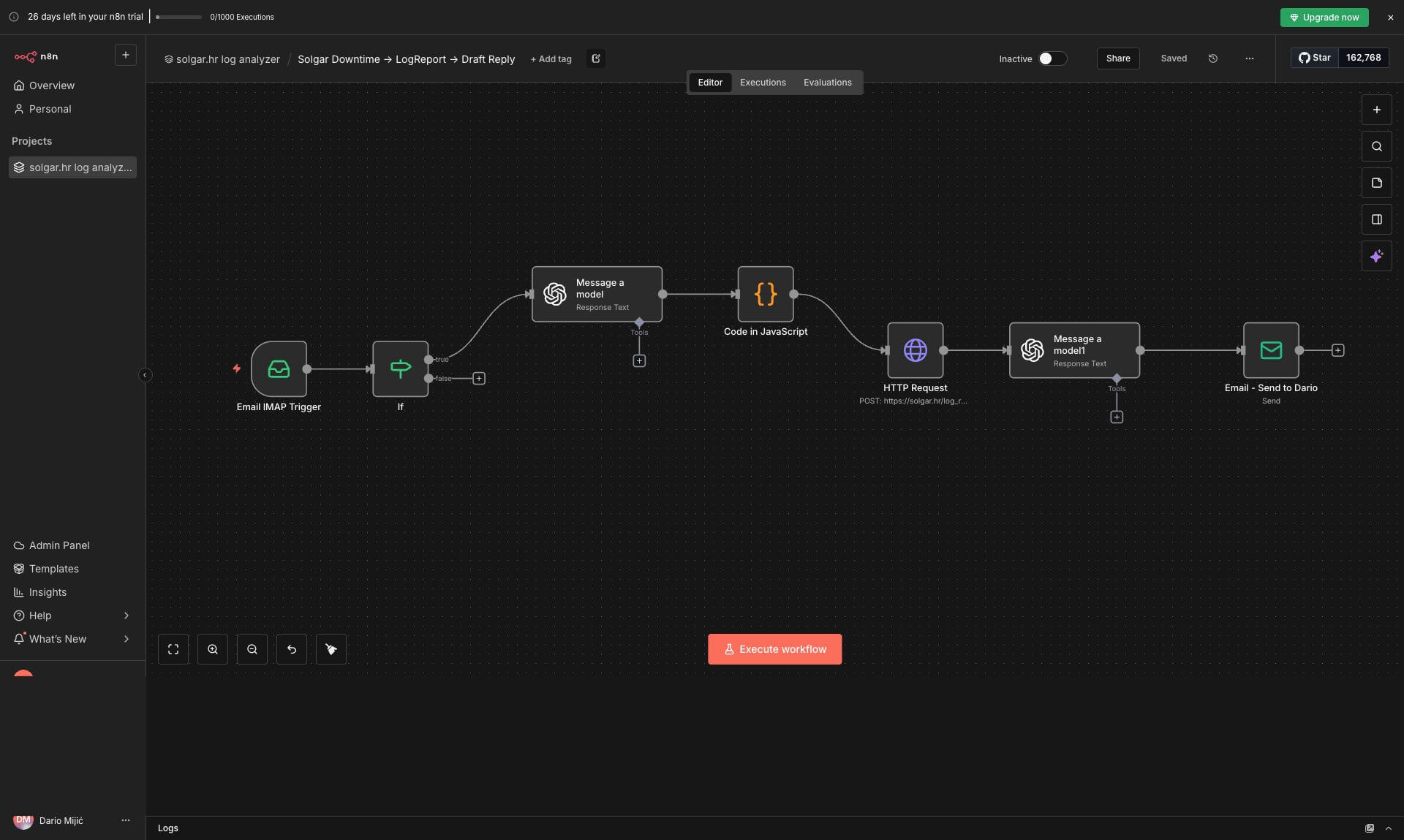
The n8n workflow keeps the process explicit: trigger on the email, extract the window, call the LogSense API, and build the draft response. Structured output reduces brittle parsing and keeps the workflow easier to extend later.
- LogSense can work in shared-hosting environments without heavyweight infrastructure.
- The workflow stays readable: trigger, filter, extract window, call API, generate draft.
- Structured JSON keeps the date parsing and reply-building more stable.
- The result is a faster response process backed by real operational data instead of guesswork.
Why it works
This setup gives a faster and more consistent response: instead of manual log digging, the system produces a draft in minutes, backed by real metrics from LogSense. It is also simple enough to extend later with stronger incident routing or additional checks.